Can OpenClaw Redefine How Businesses Use Autonomous AI?

Can artificial intelligence go beyond assisting humans and actually manage complex business processes on its own? This question sits at the centre of modern technological innovation. Organizations today generate enormous volumes of operational data, yet decision-making often remains slow, fragmented, and dependent on manual coordination. Leaders want systems that not only analyze information but also transform insights into immediate action.
This growing demand has led to the rise of intelligent orchestration platforms designed to coordinate multiple AI agents, interpret real-time information, and execute tasks automatically across digital ecosystems. One emerging example is OpenClaw, a platform designed to support scalable AI-driven decision workflows and autonomous task management.
What Makes AI Orchestration Different From Traditional Automation?
Traditional automation focuses on predefined rules. Systems follow fixed instructions and perform repetitive tasks efficiently, but they struggle when conditions change or when new information appears.
AI orchestration introduces adaptability. Instead of following rigid workflows, intelligent platforms evaluate incoming data, determine priorities, and execute actions based on context. This dynamic capability allows organizations to respond to complex situations without constantly rewriting automation rules.
The difference lies in intelligence. Automation repeats; orchestration decides.
Core Elements Behind Autonomous Decision Platforms
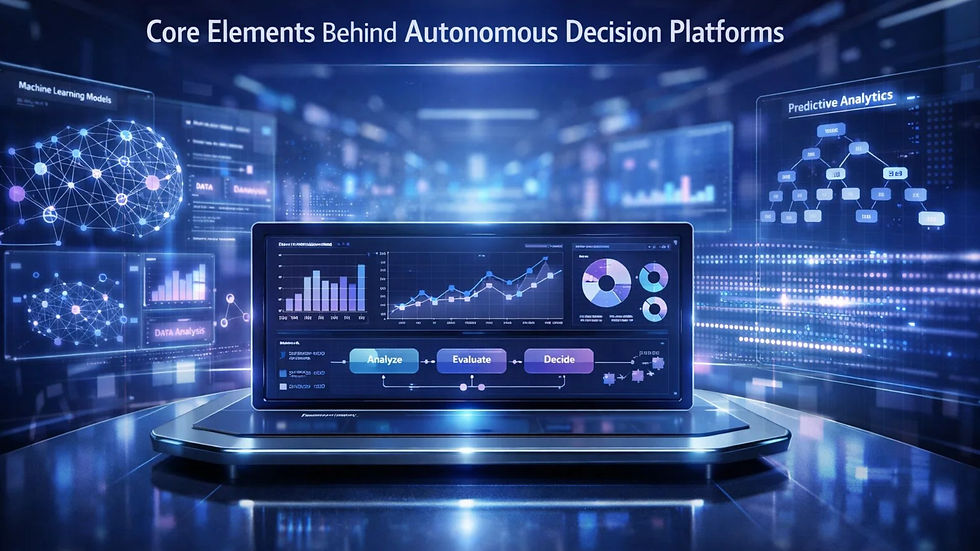
For AI systems to operate independently, several technological components must work together. These platforms combine advanced computing architecture with intelligent decision frameworks.
AI Agents
Autonomous agents are specialized digital entities that perform tasks such as data analysis, prediction, or workflow execution. Each agent focuses on a particular responsibility within a broader system.
Data Integration
Large organizations operate across many digital tools. AI orchestration platforms integrate data from multiple sources so that insights are formed from a unified information stream.
Decision Engines
Algorithms evaluate conditions, risks, and opportunities. These engines determine the most effective next step based on predefined objectives and learned patterns.
Execution Systems
After decisions are made, tasks are automatically carried out through connected applications and enterprise software.
Together, these elements create an ecosystem where machines can analyze, decide, and act without waiting for manual approval at every step.
Why Businesses Are Exploring Autonomous AI Systems

As digital operations expand, traditional management approaches often struggle to keep up. Decision bottlenecks, fragmented data, and slow response times create inefficiencies.
Autonomous AI systems address these challenges by enabling faster operational intelligence. Instead of waiting for analysts to review reports or managers to approve actions, intelligent systems can process information instantly and initiate workflows.
Organizations adopting AI orchestration frequently report improved productivity, faster insights, and greater operational consistency. By automating decision pipelines, businesses reduce repetitive work and allow employees to focus on strategic thinking.
Another significant advantage is scalability. As companies grow, operational complexity increases. AI systems can manage large volumes of tasks simultaneously without overwhelming human teams.
Real-World Applications Across Industries
Autonomous AI orchestration is rapidly expanding across sectors. Its flexibility allows organizations to deploy intelligent decision systems in many operational environments.
In customer experience management, AI agents analyze behaviour patterns and personalize interactions in real time.
Within supply chain operations, predictive models anticipate demand changes and adjust procurement strategies automatically.
In financial monitoring, intelligent systems detect unusual patterns and alert organizations to potential risks before they escalate.
Marketing teams also benefit from AI-driven orchestration. Campaign performance can be evaluated continuously, allowing strategies to evolve dynamically based on customer engagement data.
These use cases highlight how AI orchestration transforms data into actionable outcomes without constant human supervision.
Challenges That Organizations Must Address

Despite its promise, implementing autonomous AI systems requires thoughtful planning. Businesses must ensure that data quality remains reliable, since AI decisions depend heavily on accurate information.
Integration can also present challenges. Many organizations rely on legacy software systems that were not originally designed for AI-driven automation. Connecting these systems may require architectural adjustments.
Governance is equally important. As AI platforms gain more operational authority, organizations must establish clear oversight frameworks to ensure transparency, accountability, and ethical decision-making.
Addressing these challenges early helps ensure that intelligent orchestration delivers sustainable long-term value.
You can also watch: Globussoft: Transforming Businesses with AI-Powered Solutions & Next-Gen Technology
Conclusion
OpenClaw represents a growing category of AI orchestration platforms designed to transform how organizations manage complex workflows. By coordinating intelligent agents, integrating data streams, and automating decision pipelines, such systems move businesses closer to truly autonomous operations. As digital ecosystems continue to expand, the ability to convert data into immediate, intelligent action may become one of the most powerful competitive advantages in modern enterprise environments.
FAQ
What is OpenClaw?
It is an AI orchestration platform designed to coordinate multiple intelligent agents that analyze data and execute business workflows autonomously.
How does AI orchestration benefit businesses?
It improves operational efficiency, accelerates decision-making, and reduces reliance on manual coordination.
Is AI orchestration the same as automation?
No. Automation follows fixed rules, whereas AI orchestration utilises data analysis and learning algorithms to dynamically adapt decisions.

